Nakshatra Explained: The 27 Lunar Mansions and What They Reveal About You
Written by Aashish Kashyap · AstroChat Live Astrology Team · Published 7 September 2026
What a nakshatra actually is
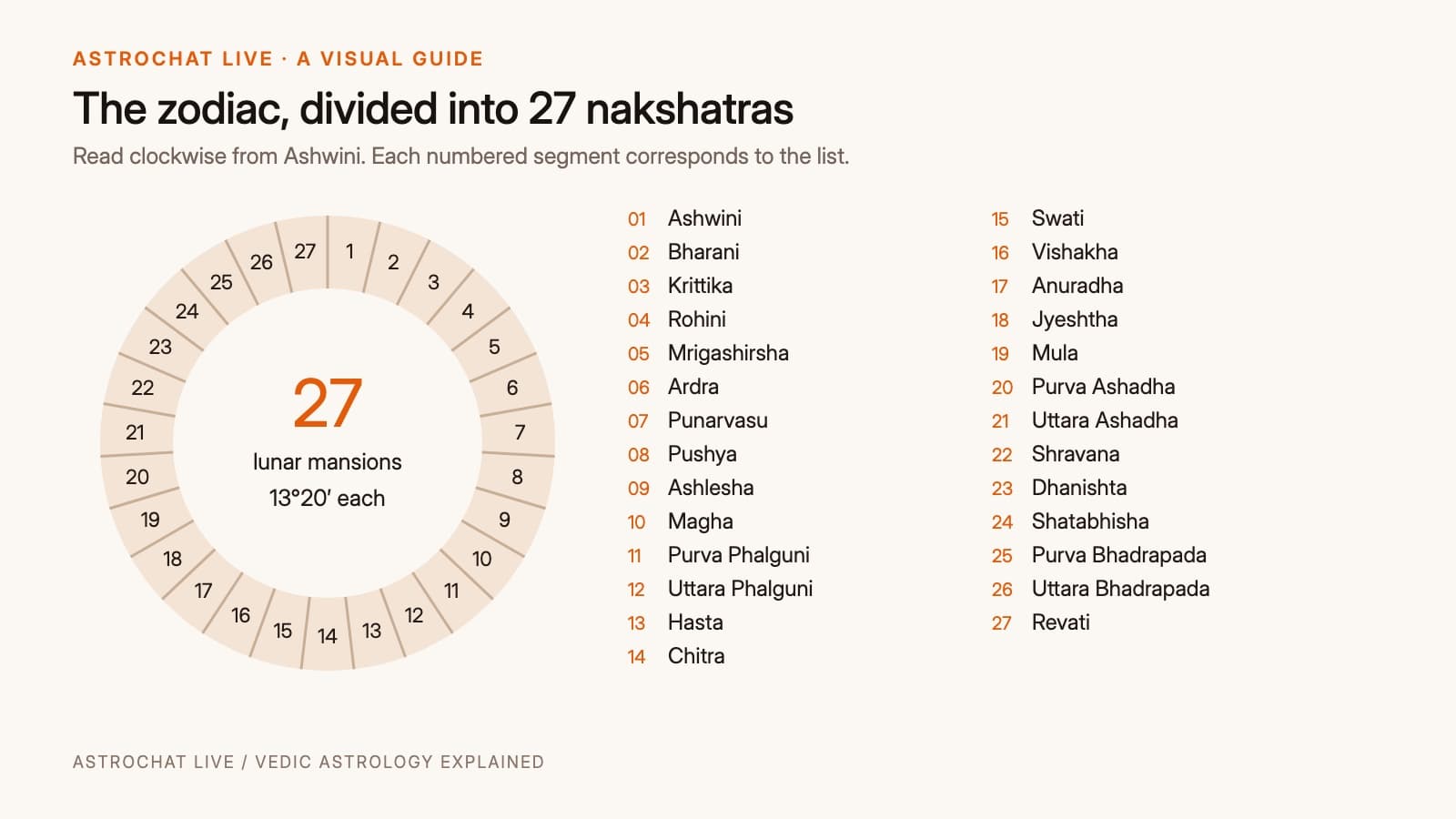
Long before the twelve zodiac signs became the most familiar layer of astrology, Vedic tradition was already built around a finer, older system, the nakshatras. The zodiac is divided into 27 equal segments, each one called a nakshatra, or lunar mansion, based on the moon's position against a fixed star grouping. Where a zodiac sign covers 30 degrees of sky, a nakshatra covers roughly 13 degrees and 20 minutes, which is why it reads your personality with far more precision than a sun sign or even a moon sign alone.
Why nakshatras matter more than most people realise
Most people who search for their horoscope have never checked their nakshatra, simply because it never made it into newspaper astrology the way sun signs did. Yet in traditional Vedic practice, the nakshatra is treated as more foundational than the zodiac sign. It is the nakshatra, not the sign, that traditionally decides your gana, your nature, your ruling deity, and even the first syllable of your name in many families that still follow the old naming convention.
Gana, the three natures every nakshatra falls into
Every nakshatra is also classified under one of three ganas, deva, godly, manushya, human, or rakshasa, demonic, which traditionally describes the underlying temperament connected to that birth star. This classification is used heavily in kundli matching, since gana compatibility between two people is one of the eight kootas checked in gun milan matching, tying this deeper layer of nakshatra directly back into how compatibility is judged in an actual marriage matching.
The four padas inside every nakshatra
Each nakshatra is further divided into four padas, or quarters, and each pada carries its own subtle shade of meaning tied to a specific navamsa sign. Two people born under the same nakshatra but a different pada can show noticeably different personalities, which is one reason two people with the same moon sign can still feel very different to be around. This is also why a proper nakshatra reading needs an exact birth time, not just a birth date.
How your nakshatra shapes name, timing and temperament
In many Indian families, the first letter of a child's name is traditionally chosen based on their birth nakshatra and pada, a practice that predates modern naming trends by centuries. Beyond naming, your nakshatra is also used to calculate your Vimshottari Dasha sequence, the specific order of planetary periods you will move through in life, which makes it one of the most practically useful pieces of your chart rather than just a personality label.
A few nakshatras and what they're known for
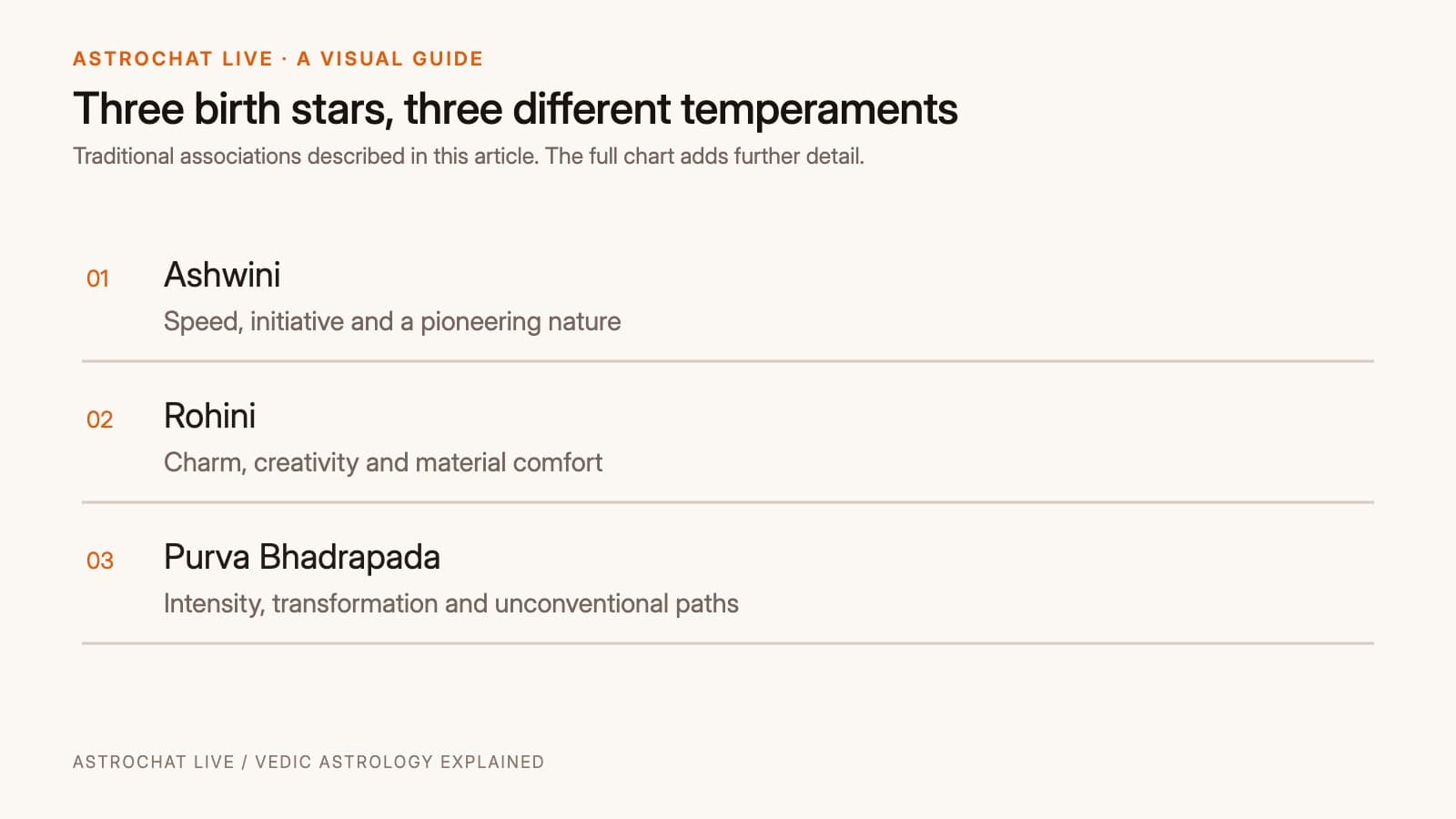
Ashwini, the very first nakshatra, is associated with speed, initiative and a pioneering nature. Rohini, ruled by the moon itself, is linked to charm, creativity and material comfort. Purva Bhadrapada carries an intense, transformative energy, often showing up in people drawn to deep or unconventional paths. These short sketches only scratch the surface, but they show why nakshatra based readings tend to feel more specific than a generic sun sign description.
Finding your own nakshatra
Since nakshatra is based on the moon's exact position, not the date alone, you need your accurate birth time and place to calculate it correctly, the same details required for a proper kundli. A rough guess based on your birth month will not work here, the moon moves through all 27 nakshatras roughly once every 27 days, so timing precision genuinely matters.
FAQ
Reading about it is the easy half
Get answers from your own birth details on WhatsApp, or start with today's free rashifal for your sign.