Kaal Sarp Dosha: What It Really Means and How Serious It Actually Is
Written by Aashish Kashyap · AstroChat Live Astrology Team · Published 7 September 2026
What kaal sarp dosha actually is
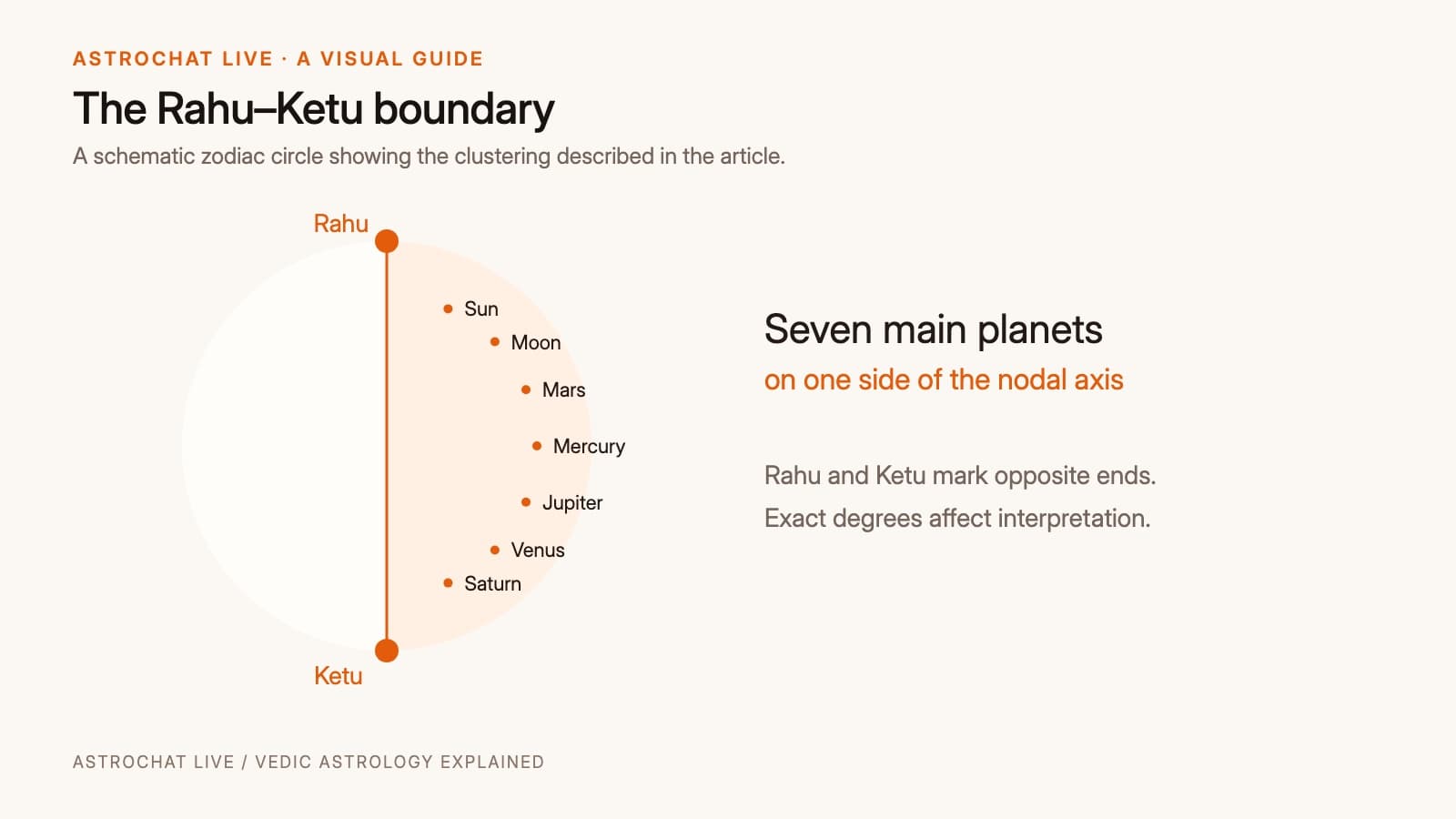
Few dosha names spread more anxiety online than kaal sarp, partly because the name itself translates to serpent of time, which sounds far more ominous than the actual astrological condition it describes. It occurs when all seven main planets, the sun through Saturn, are positioned on one side of the axis formed by Rahu and Ketu, the lunar nodes, essentially getting hemmed in between the two.
The twelve types, and why they are not all equally intense
There are twelve recognised types of kaal sarp dosha, named after mythological serpents, depending on which houses Rahu and Ketu occupy in the chart. Some types, like Anant or Kulik, are traditionally read as milder, while others, like Vasuki or Shankhpal, are considered more intense. This is one of the most commonly skipped details in casual online readings, which tend to treat all twelve types as identical when they are not.
What it is believed to cause, without the exaggeration
Traditionally, kaal sarp dosha is associated with obstacles, delays and a sense of struggling against invisible resistance, particularly in the early part of life. It does not traditionally point to a cursed or doomed life, despite how dramatically it often gets described online. Many well known and successful individuals are found, on closer chart analysis, to have some form of kaal sarp dosha, which is usually cited by astrologers as evidence that its effect is far more nuanced than blanket misfortune.
How astrologers check for it in your chart
Confirming kaal sarp dosha requires looking at the exact placement of every planet relative to Rahu and Ketu, not just a rough glance at the chart. A planet sitting exactly on the node's degree, or a slight gap in the clustering, can change whether the dosha is considered fully formed, partially formed, or cancelled entirely, which is why this is not something to self diagnose from a quick online description.
Traditional remedies, explained plainly
Common remedies include specific pujas dedicated to Rahu and Ketu, visiting temples associated with serpent worship such as Kalahasti, and certain mantra recitations. As with most doshas, these are traditionally used to ease the intensity of the effect rather than promised as a complete reversal, and are typically suggested only after a proper reading confirms the dosha is genuinely present.
Why some astrologers disagree on how much it matters
Not every classical or modern astrologer weighs kaal sarp dosha equally heavily, and a meaningful number consider it a relatively minor factor compared to the overall strength of the rest of the chart. This disagreement is worth knowing, since it means a dramatic warning about kaal sarp dosha from one source is not necessarily shared by the wider tradition.
FAQ
Reading about it is the easy half
Get answers from your own birth details on WhatsApp, or start with today's free rashifal for your sign.