

What Is Guna Dosha and Should It Really Stop a Marriage?
Written by Aashish Kashyap · AstroChat Live Astrology Team · Published
Quick answer
Guna dosha simply means a lower than ideal score in the 36 point ashtakoot matching system, and no, it should not automatically stop a marriage on its own. A low score is a flag to look closer, not a verdict, and the specific weak kootas matter far more than the total number.
What guna dosha technically means
When two charts are matched using the ashtakoot system, you ideally want a combined score of 18 or higher out of 36. A score below that threshold is technically labelled guna dosha, a shortfall in the gunas, or qualities, being compared. The word dosha sounds alarming, but here it simply means a numeric shortfall, not a curse or an omen.
How a low score actually happens
Scores drop for specific, identifiable reasons, a mismatch in nature between the two moon signs, a difference in temperament category, or a conflict in the health related koota, among others. A couple can score low primarily because of one or two categories while scoring well everywhere else, and a low overall number can hide a strong match on the categories that matter most to a specific couple.
Should a low score genuinely stop a marriage
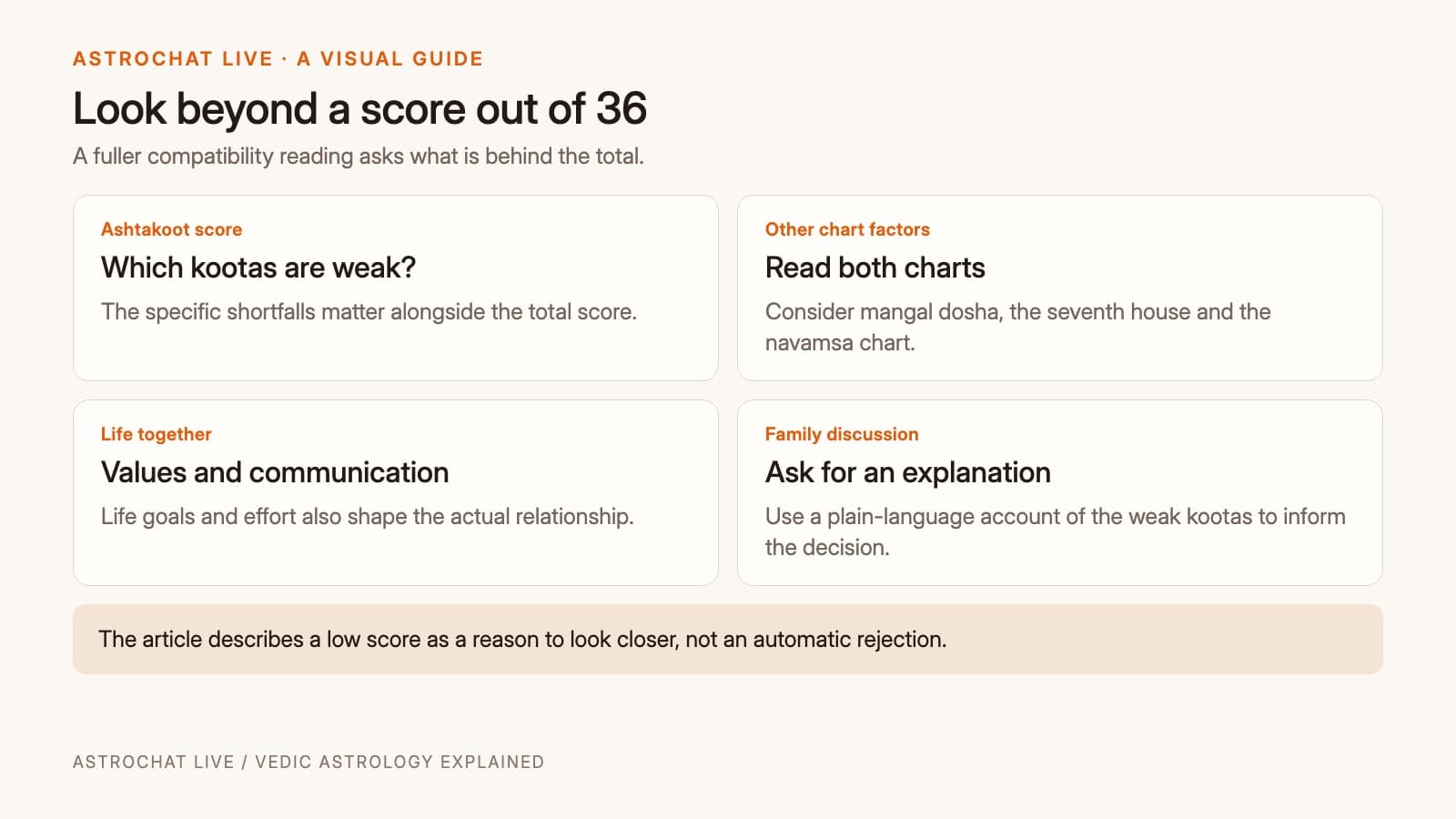
This is where fear based astrology does the most damage, and it is worth being direct about it. A responsible astrologer treats a low guna score as one input to examine further, not a standalone reason to end a match. Compatibility in values, communication style and life goals, none of which show up in a 36 point number, routinely matters more to how a real marriage actually goes.
What experienced astrologers actually weigh more than the number
Beyond the raw score, thorough matching also checks mangal dosha compatibility, the strength of the seventh house in both individual charts, and the navamsa chart for a deeper read on the marriage itself. A couple with a mediocre ashtakoot score but strong indicators across these other factors is often read far more favourably than the single number suggests on its own.
How to have this conversation with your family
If a low score is creating family pressure, the most useful thing you can do is ask specifically which kootas are weak and why, rather than accepting or rejecting the match based on the total number alone. A good astrologer can explain this in plain language, and that explanation, not the score itself, is what should inform the decision.
FAQ
Reading about it is the easy half
Get answers from your own birth details on WhatsApp, or start with today's free rashifal for your sign.